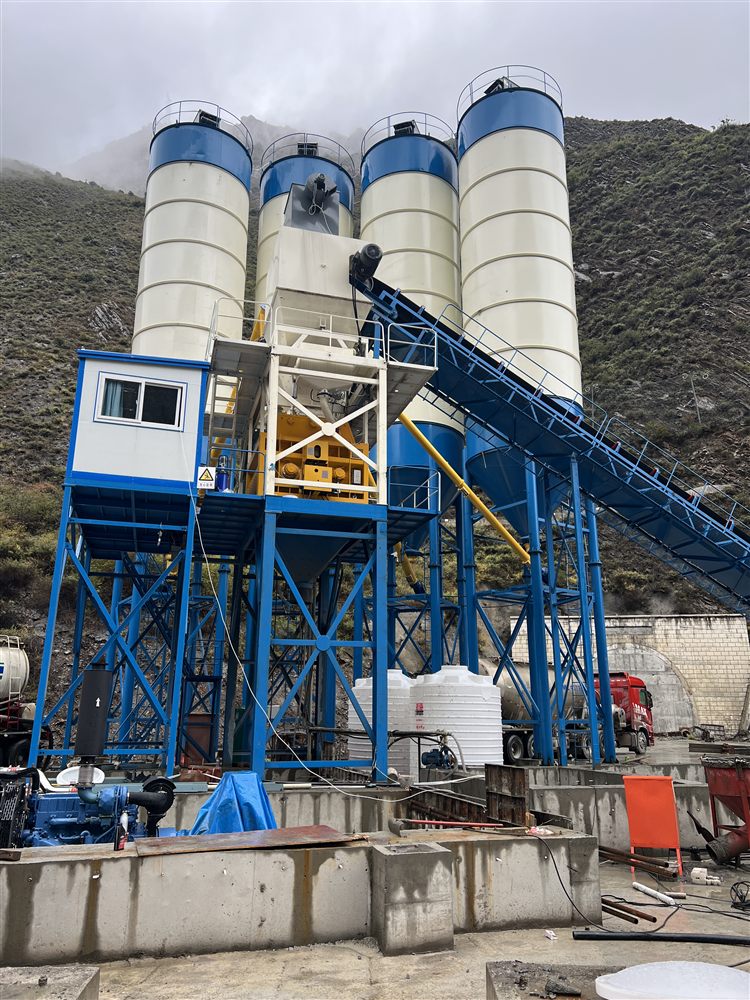
This Nigeria HZS150 double-line concrete batching plant project gives buyers a realistic reference for high-output ready-mix and engineering concrete production. Instead of judging only by a quotation sheet, buyers can review the Nigeria HZS150 project case and compare the visible plant layout, silo position, belt conveyor direction and mixer platform with their own jobsite.
The project is useful for buyers searching for a large concrete batching plant in Nigeria, a double-line ready-mix plant, or a Chinese concrete batching plant supplier with real export project evidence.
Why HZS150 double-line matters
A double-line layout is normally considered when a project needs higher daily output, production continuity or better truck dispatch efficiency. For Nigeria ready-mix supply, road work and large building projects, the buyer should confirm aggregate supply, cement storage, truck access and operator workflow before choosing the final HZS150 configuration.
Buyer checks from the project photos
- Confirm whether the site has enough space for two production lines, aggregate bins, cement silos and truck turning.
- Check belt conveyor height, maintenance access and whether the layout matches local aggregate feeding conditions.
- Compare HZS150 with HZS120 or HZS180 when daily demand may increase after startup.
- Ask for container loading, installation and control-system proof before confirming the order.
What the photos prove and what they do not
The supplied photos verify that a large double-line plant was assembled at the Nigeria project and show the main spatial relationship between silos, conveyors, aggregate systems and mixing towers. They do not by themselves prove a guaranteed hourly output, concrete strength, final acceptance date or the number of mixer trucks used. Those claims require production logs, calibration records, laboratory reports or customer confirmation.
How a double line changes operations
Two lines can support parallel production, different recipes or limited continuity when one line stops for planned work. The benefit exists only when cement feeding, aggregate supply, power, truck access and dispatch can support both lines. A shared bottleneck can reduce the output of both mixers, so the quotation should identify which equipment is independent and which equipment is shared.
Commissioning output and the 70% reference
For planning, initial production around 70% of theoretical capacity can be reasonable while the team adjusts moisture correction, loader timing, truck positioning, recipe sequence and operator workflow. This percentage is an operating reference, not a documented result for this Nigeria project. Buyers should request a timed batch record and state whether the measurement includes truck changes, recipe changes and normal interruptions.
Truck, laboratory and staffing plan
The truck fleet should be calculated from legal load and the complete delivery cycle rather than from plant capacity alone. A project laboratory can test materials, slump and specimens, but its exact scope depends on the contract and local standards. One trained control operator may supervise an integrated dual-line control system during stable production, while loader operation, dispatch, laboratory work and mechanical inspection still require separate responsibilities. “One operator” should never mean one person runs the entire site alone.
Questions to settle before fabrication
- Will the two lines run the same recipe or serve different production schedules?
- Which silos, scales and conveyors are shared, and what happens if one shared component stops?
- How will rain, dust, unstable power or delayed cement deliveries affect the site plan?
- What local changes are needed for voltage, operator language, spare parts and access platforms?
How to continue the configuration discussion
Start from the stationary concrete batching plant range, then review ready-mix concrete plant configuration and real project proof photos. For a practical quotation, send Nigeria destination city, target hourly capacity, daily concrete demand, cement storage plan, voltage and site photos through the quotation form.